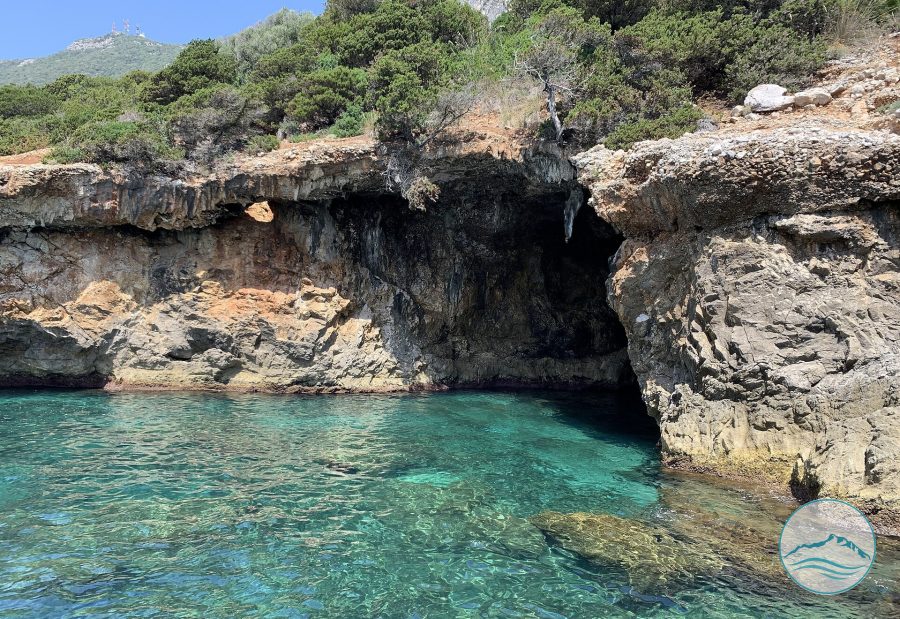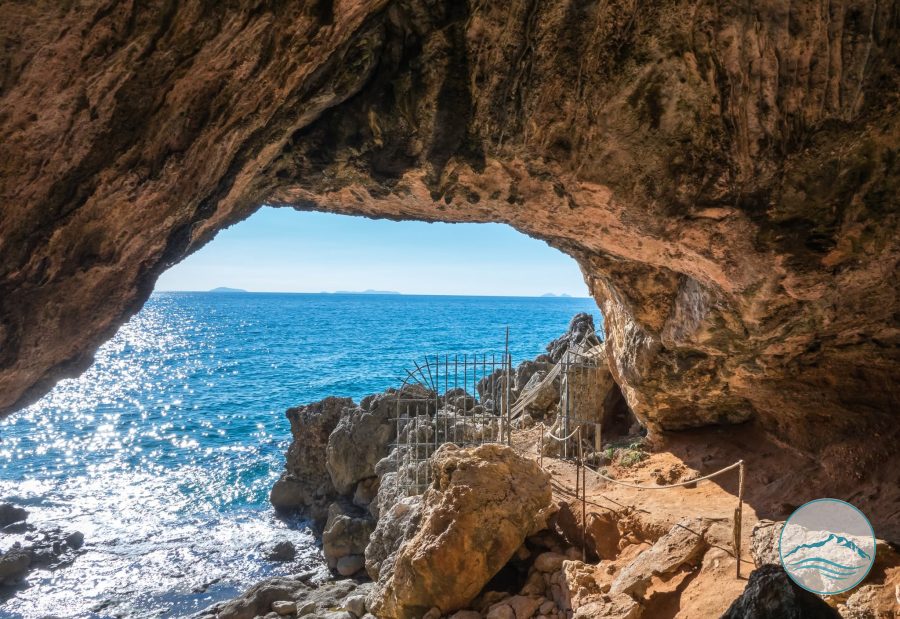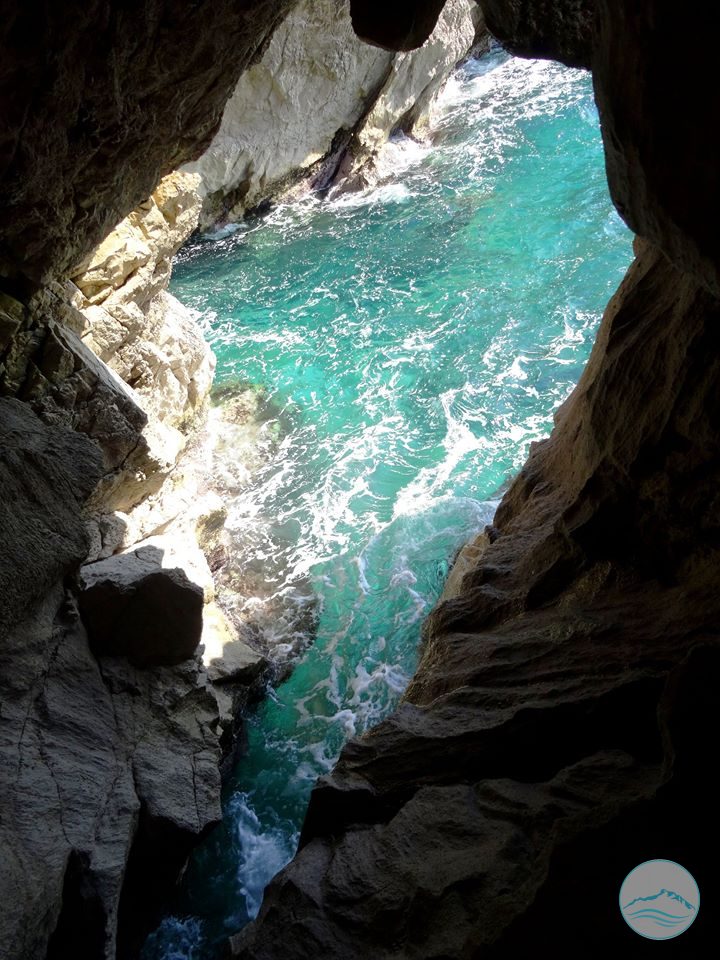
A large coastal cave on the southern side of the promontory, in the Quarto Caldo area, about 200 metres west of the Grotta delle Capre. Its name (“big pit”) comes from the wide circular opening created by the collapse of the vault, which forms a chasm-like space overlooking the sea, reachable both by land and by sea.
The first investigations were carried out by Alberto Carlo Blanc, who immediately recognised the importance of the deposit for its wealth of stone tools and fossils. Interrupted by the Second World War, excavations resumed in 1947. The cave fill, about 14 metres thick and divided into 51 layers, rests on a marine beach of the last interglacial (about 130,000–120,000 years ago), rich in molluscs.
Above it lies an archaeological sequence ranging from the Middle to the Upper Palaeolithic. Layers 41 to 23 contain Mousterian tools made by Neanderthal man; a sterile clay layer, number 22, marks the transition to the next phase, and from layer 21 the Aurignacian industry appears, the culture of the first Homo sapiens to reach Europe. The Aurignacian tools of the Fossellone were made from small flint pebbles with a technique typical of the Pontine area, so much so that Blanc proposed the name “Circeian” for this variant.
Together with the Grotta Guattari, the Grotta Breuil and the Grotta delle Capre, the Fossellone makes the promontory one of the international reference sites for studying the transition from Neanderthals to Homo sapiens.