The rich biodiversity of the Circeo area is also recognised by the European Union: on the promontory, across the Pontine Plain, on the islands and in the surrounding sea, several sites have been identified as part of the Natura 2000 network. These are Sites of Community Importance, now largely designated as Special Areas of Conservation (SCI-SAC, Habitats Directive 92/43/EEC), and Special Protection Areas (SPA, Birds Directive 2009/147/EC, which replaced 79/409/EEC).
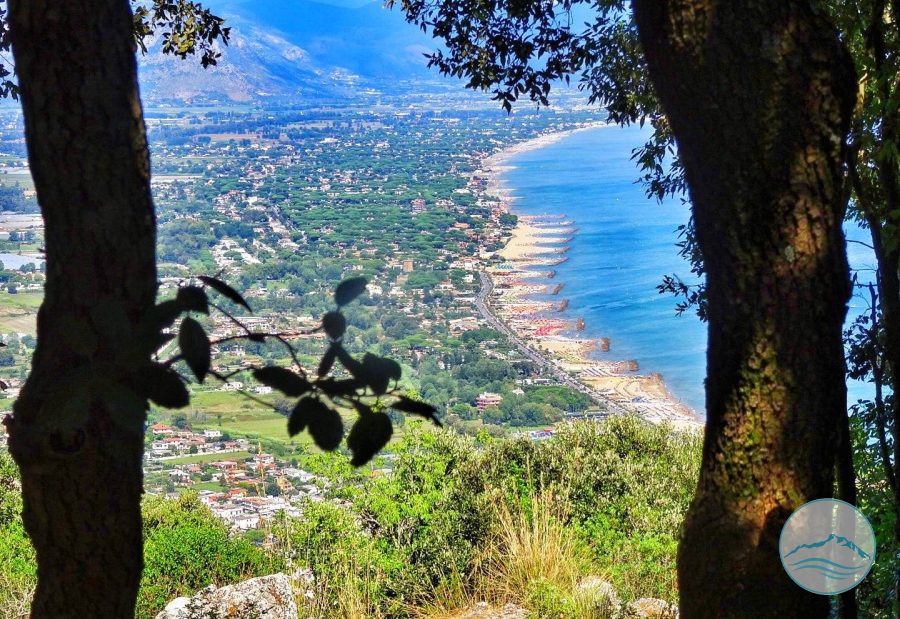
Among the marine sites is the Special Area of Conservation «Fondali tra Capo Circeo e Terracina» (Seabed between Capo Circeo and Terracina, code IT6000013). Lying off the beaches of San Felice Circeo, it stretches across the gulf as far as Terracina, covering some 3,847 hectares within the Mediterranean biogeographical region.
The site is not part of the National Park, but since 2020 the Lazio Region has entrusted its management to the Circeo National Park Authority, together with the neighbouring «Fondali tra Capo Portiere e Lago di Caprolace».
Its greatest treasure is the Posidonia oceanica meadow, a seagrass endemic to the Mediterranean.
Posidonia meadows are a favoured habitat for a great many animal species, which find food and shelter from predators there, and they serve as breeding grounds for countless marine organisms: this is why they are regarded as true «nurseries» of the sea.
They also perform two vital functions for the ecosystem: they produce oxygen (around 20 litres per square metre a day) and organic matter (from 68 to 147 grams of carbon per square metre a year from the leaf surface).
When they extend evenly over large areas, the meadows play a decisive role in the balance of the coastal strip.
Posidonia's rhizomes stabilise the seabed and naturally curb the erosion of sandy shores, while the movement of its leaves slows the waves, forming a genuine natural barrier.
Numerous studies show that these meadows influence coastal dynamics and even the shape of the beach profile.
Posidonia belongs to the monocotyledons, the same class as palms and irises: it has roots, a stem and leaves gathered in bundles, and it produces flowers, rarely, in autumn and ripe fruit in spring, known as «sea olives».
The stem, more properly called a rhizome, grows both horizontally, to colonise new areas and give rise to new plants, and vertically, to avoid being buried by sand and make the most of the light.
The tangle of rhizomes, roots and sandy sediment forms what is known as the «matte», a terrace-like structure that can reach 6 metres in height and on which new plants grow.
Posidonia usually grows on sandy seabeds, but it can also take hold on rock and on shipwrecks.
Its ribbon-like leaves, with rounded tips, can exceed one and a half metres in length.
Once shed, the leaves pile up on the beaches, especially after storms, and together with fibrous remains and rhizomes they form the so-called «banquettes»: welcomed by those who see the sea as a natural habitat to be protected, less popular with those who manage the beaches in summer.
The «balls» found on the sand, on the other hand, are called «aegagropiles»: they are the fibrous remains left on the rhizome after the leaves fall, which, once detached, are rolled together and enlarged by the waves until they are washed ashore.
Posidonia is very demanding when it comes to salinity, temperature and water clarity: put simply, it needs a clean sea, free from sudden changes in temperature and salinity.
Besides the Posidonia meadows (priority habitat 1120*), the site's habitats of Community interest include sandbanks slightly covered by seawater all the time (1110) and reefs (1170).
The main pressures come from commercial and recreational fishing, bathing and boating: trawling, anchoring, harvesting, marine pollution and the spread of invasive species such as the alga Caulerpa racemosa.
The conservation measures prohibit trawling over the meadows, anchoring on protected habitats, the removal of sediment and mooring fields using deadweight anchors: where moorings are needed, low-impact systems must be used.
Further measures include anti-trawling barriers, buoyed free-anchoring zones on seabeds without protected habitats, and awareness campaigns.
Data sources: site conservation measures (Lazio Region, DGR 679/2016, sections 7.1.1, 7.1.2 and 7.16) and assignment of management to the Park Authority (DGR 202/2020).