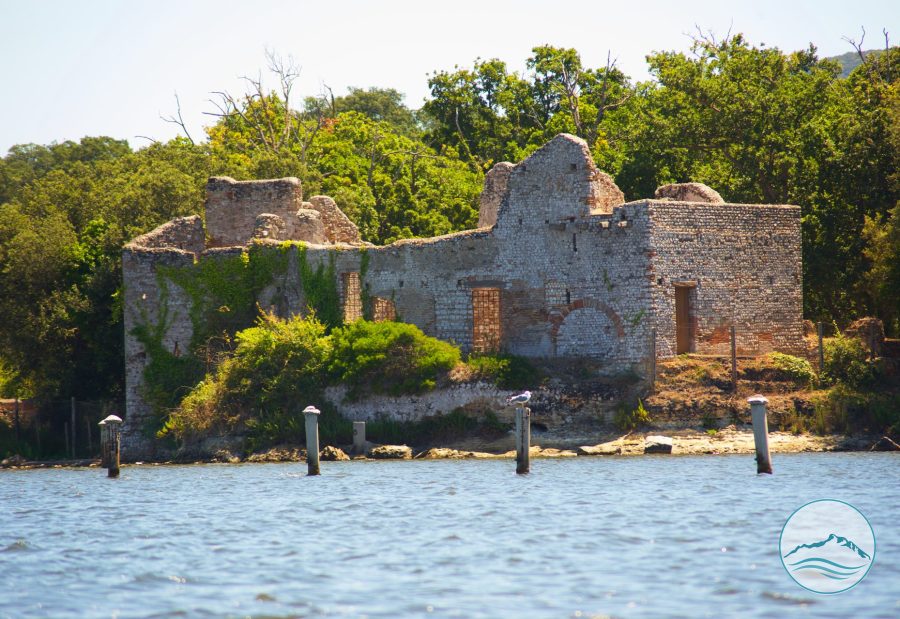
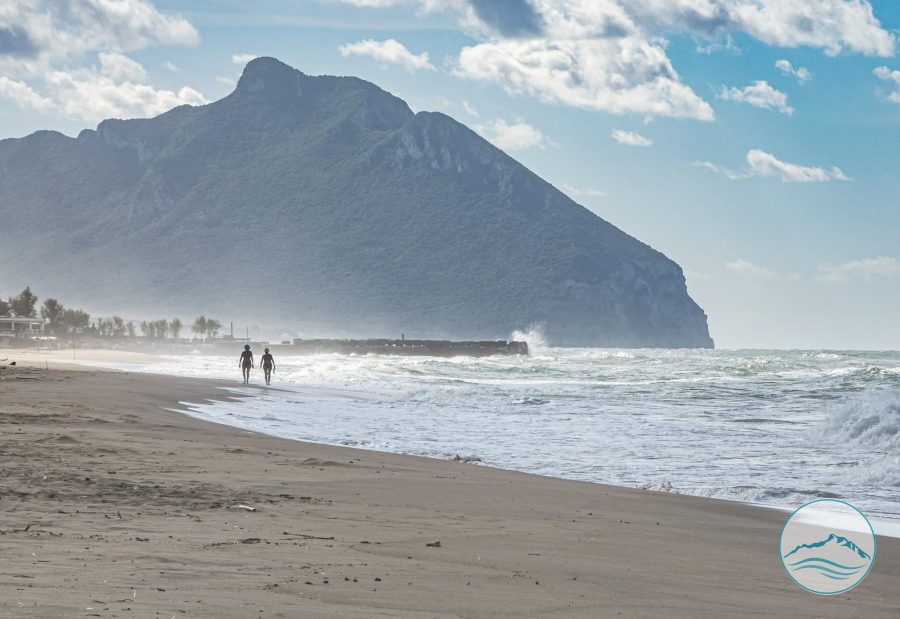
This is the north-western sector of the great Villa di Domiziano (Villa of Domitian), the largest archaeological complex on the Circeo (around 46 hectares), which occupies the peninsula overlooking the Lago di Sabaudia.
This core area is laid out around a large rectangular fishpond with an apse, faced in white marble, and a portico runs along three sides of the basin; behind it lie further residential rooms. Much of the villa is still hidden beneath vegetation and has not been fully excavated. Today it lies within a strict nature reserve of the National Park and can be visited only along marked trails.
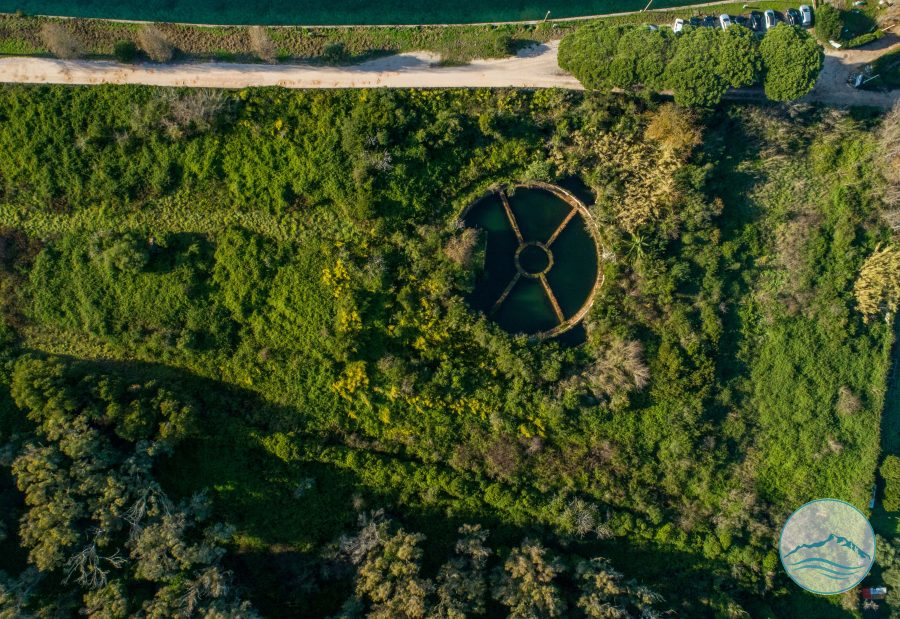
The tour of the villa continues northwards, where the oldest structures survive, predating Domitian's rebuilding. In the central part of the route stand the monumental cisterns, remarkable for their sheer size, built to give the villa an abundant water supply for the baths, the various pools and fishponds, and all the activities needed to keep an imperial residence running.
Archaeological investigations, carried out at Villa Domiziano for almost a century, have brought to light no fewer than six cisterns. Among the best known are the Pillared Cistern (Cisterna a Pilastri), which belongs to the site's first building phase and dates from the 2nd–1st century BC; the Collecting Cistern (Cisterna di Raccolta) and the Echo Cistern (Cisterna dell'Eco), both from the third, pre-Domitianic building phase and dated to the late 1st century BC; and the Ship Cistern (Cisterna delle Navi), named after the evocative graffiti preserved on its inner walls. They are the work of a skilled but unknown hand who, by drawing ships at their moorings, left us a kind of impromptu snapshot of the ancient view over the Lago di Paola.
The Echo Cistern is well worth a visit. Once inside, descending almost as if into the belly of a whale, you will be amazed by the perfect echo returned by the cistern's walls, which are in excellent condition. Its size, too (a full 60 m long), is astonishing and gives a sense of the virtually unlimited quantity of water it supplied, not only to the baths and pools but also to kitchens, irrigation systems, drains, fountains, nymphaea and much more.
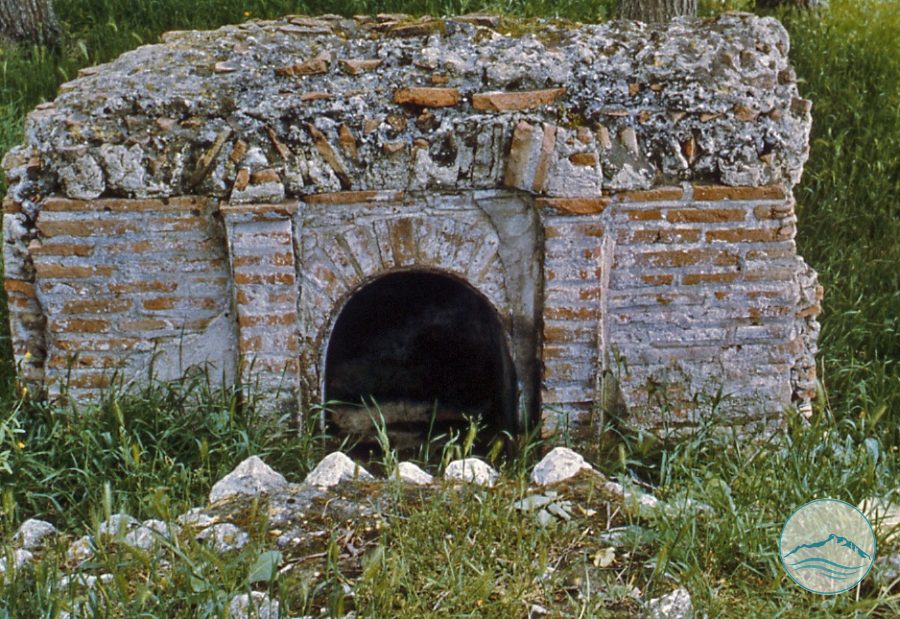
The Echo Cistern has two aisles, divided by massive pillars, and in the centre you can see the impluvium, the opening through which rainwater entered. The interior is lined with cocciopesto, a special hydraulic mortar used to coat every structure in contact with water.
It was also connected to the aqueduct. The villa's water network was in fact fed by two aqueducts at Molella, which carried spring water from the Monti Lepini.
Continuing north-west, you reach the last excavated area of this imposing imperial villa: the Apsidal Basin area (Bacino Absidato).
This area has the greatest concentration of structures belonging to a late Republican villa, and it was here that Domitian's architects displayed extraordinary ingenuity, successfully incorporating the monumental structures of the earlier complex into the sumptuous new residence.
The dominant architectural features are the Great Fishpond, the Quadriporticus and the Pillared Cistern mentioned above, the main water reserve of the late Republican villa. The excavations have made it possible to produce an accurate 3D reconstruction of the area.
An imposing quadriporticus, decorated with wall frescoes imitating marble and a floor mosaic of tiny white tesserae, ran around the pool and opened onto the lake through a colonnade. The pool, used for breeding fish but also clearly designed to be admired, may have been surrounded by a garden.
With Domitian's remodelling, all these spaces were enhanced by lavish decoration, now largely lost: floors in opus sectile, splendid wall and floor mosaics, stuccoed ceilings, frescoed walls, and numerous statues and decorative sculptures, irretrievably lost after centuries of neglect and abandonment.
Of the statues that were “saved”, three busts are now in the Museo Civico in Terracina, a “Young Faun Playing the Flute” can be admired in the Gallery of the Candelabra at the Vatican Museums, while the marvellous Apollo of the Parnopios type (the locust hunter) is in Kassel, Germany.